Handout – Week 1
In the introduction, we’ll explore the definition of counterpoint and trace its evolution from its origins to its influence on contemporary music.




Definition of Counterpoint
The term derives from the Latin punctus contra punctum—” point against point”—which reflects the interplay of distinct musical ideas. This technique is fundamental in Western art music, requiring a balance between melodic independence and harmonic coherence.
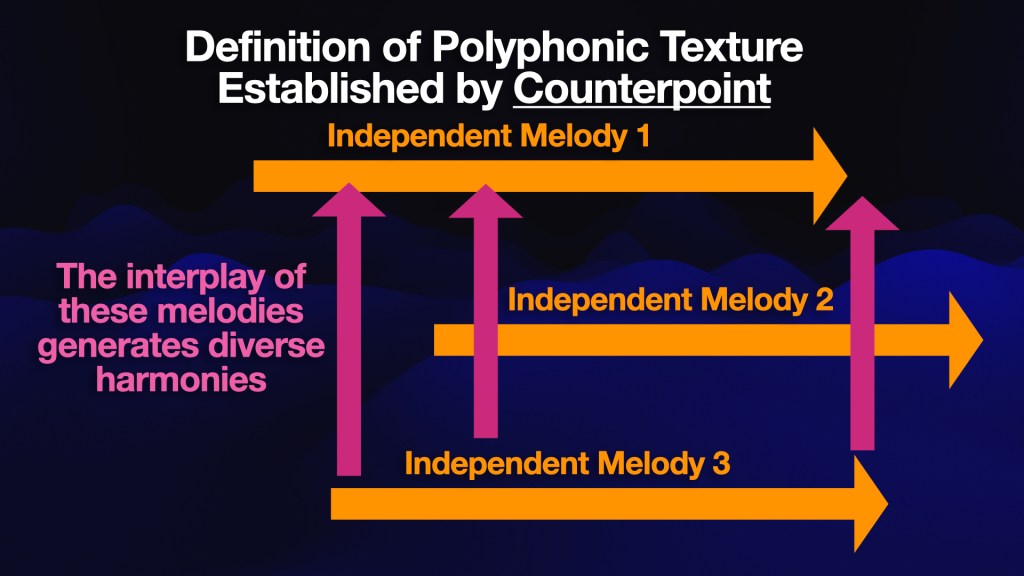
Counterpoint is the art of combining multiple independent musical lines, melodies, or voices, into a cohesive and harmonious texture. Unlike homophonic texture, where chords support a melody, counterpoint treats each voice as an independent melody, interacting harmonically with the others.
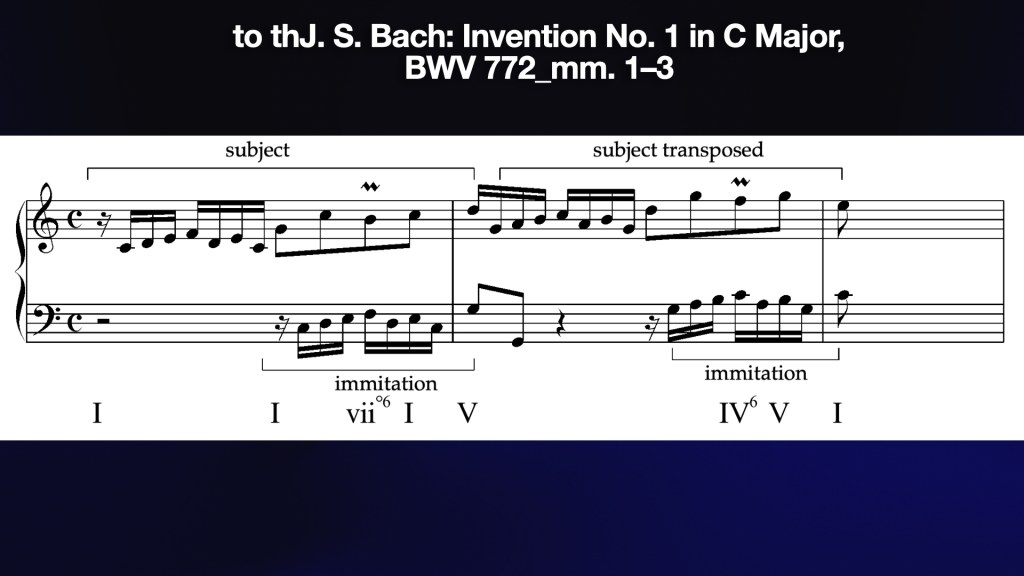
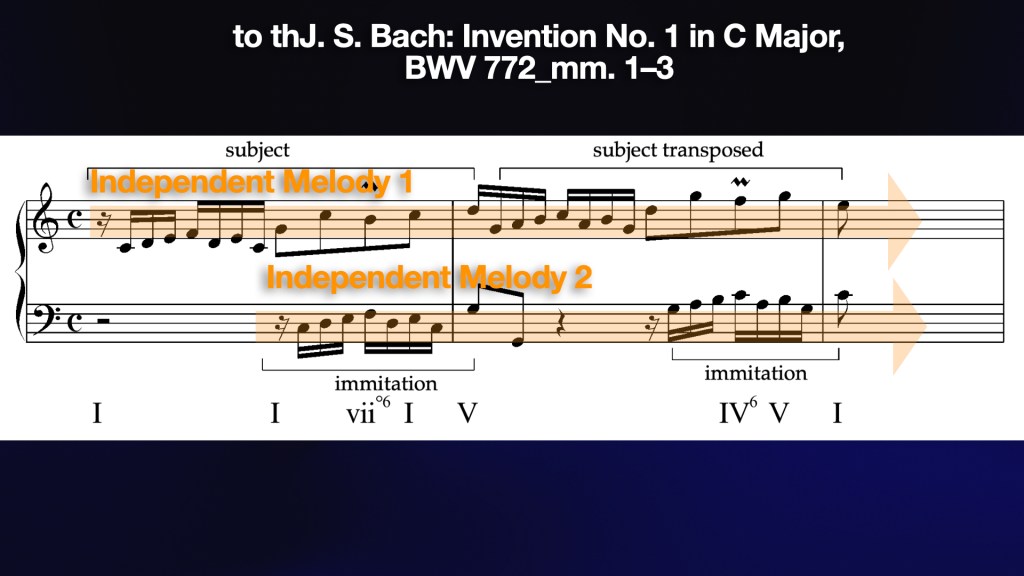
In a musical work employing counterpoint techniques, from a horizontal perspective, each voice is treated as an independent melody. From a harmonic perspective, blending these melodies also creates diverse chords.
In other words, in contrapuntal texture, the interplay of melodies generates diverse harmonies, while in homophonic texture, the accompaniment provides the primary harmonic framework.


Counterpoint vs. Polyphonic Texture:
Counterpoint:
Counterpoint is a compositional technique to structure the interaction between independent voices in polyphony.
Polyphonic Texture
= Contrapuntal Texture
= Multiple-Voice Texture:
Polyphonic texture in music results from applying counterpoint techniques.
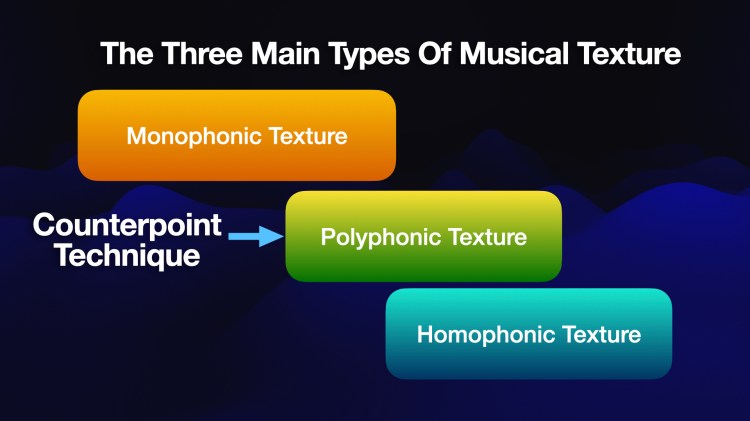
The Three Types of Musical Textures
The three types of musical textures—monophony, polyphony, and homophony—have been integral to music history. This also implies that composers have widely employed counterpoint techniques throughout the ages, as they enable the creation of layered and intricate musical structures. In general, polyphonic texture was predominantly used during the late Medieval, Renaissance, and Baroque periods, while composers of the Classical and Romantic periods tended to favor homophonic texture in their works. However, polyphonic texture remained a vital tool for composers such as W. A. Mozart, J. Brahms, and F. Schubert, who infused their works with tension and emotion.
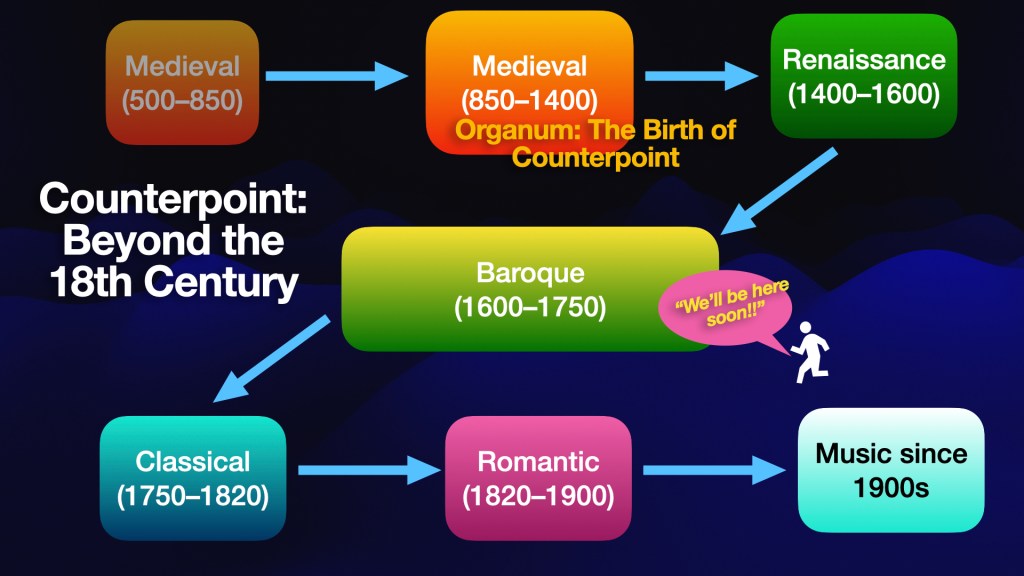

The Use of Counterpoint Across Centuries
Counterpoint is not confined to a single era but is a cornerstone of musical expression. Its journey through history is both rich and transformative:
Counterpoint Techniques Used in Medieval Period (approx. 850 – 1400): Counterpoint began with organum, where a second melodic line was added to a plainchant, creating early examples of polyphony.
Alleluia: The Angel of the Lord;
Responding (Oblique Organum)
Description:
This piece was performed in the oblique organum style of early polyphony.
Renaissance Period (approx. 1400s – 1600s):
Composers like Josquin des Prez and Palestrina refined the counterpoint, achieving intricate, seamless polyphony emphasizing balance and clarity.
Giovanni Pierluigi da Palestrina:
Ave Maria for Five Voices (SSATB)
(1575)
Description:
Published in 1575 as the second piece in his collection Motettorum liber tertius, this motet showcases Palestrina’s exceptional skill in Renaissance polyphony, highlighted by its smooth interplay of independent melodies and tranquil harmonic structure.
Baroque Period (approx. 1600s – 1750s):
The 18th Century represents the pinnacle of counterpoint, with composers like J.S. Bach crafting monumental works such as The Art of Fugue and Well-Tempered Clavier, showcasing its technical brilliance and expressive depth.
J. S. Bach:
Prelude No. 2 in C Minor, BWV 847
Well-Tempered Clavier, Book I
Classical Period (approx. 1750s – 1820s): While the Classical era simplified textures, counterpoint remained vital in the works of Haydn, Mozart, and Beethoven, who used it to develop and intensify musical ideas.
Ludwig van Beethoven:
Grosse Fuge, for String Quartet, Op. 133
Description:
A mix of different musical textures.
Romantic Period (approx. 1820s – 1900s): Schubert, Schumann, Brahms, and Richard Wagner were still using counterpoint techniques in their works to create layered compositions. These techniques were especially useful when writing music for large orchestras.
Franz Schubert:
Piano Sonata in B Major, D.575
Description:
A mix of different musical textures.
J. Brahms:
Violin Sonata No. 2 in A major, Op. 100
Description:
One-against-one counterpoint
Busoni:
Fantasia Contrappuntistica, BV 256
Description:
One-against-one counterpoint
Music from the 1900s to present: Counterpoint thrives in contemporary classical compositions and even popular music. From complex textures in film scores to contrapuntal techniques in progressive rock and jazz, the principles of counterpoint remain relevant.
Béla Bartók:
Music for Strings, Percussion and Celesta, Sz. 106
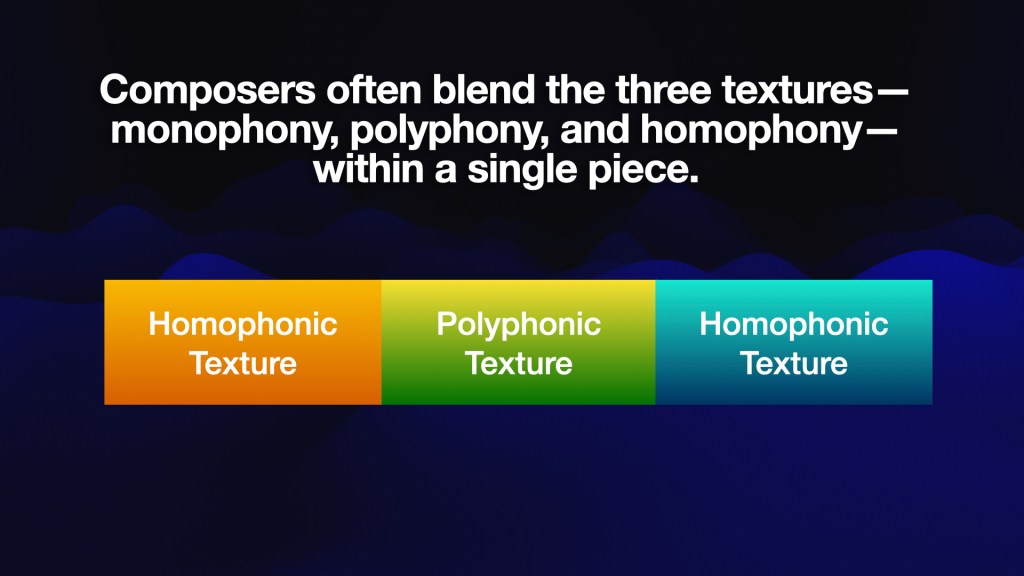
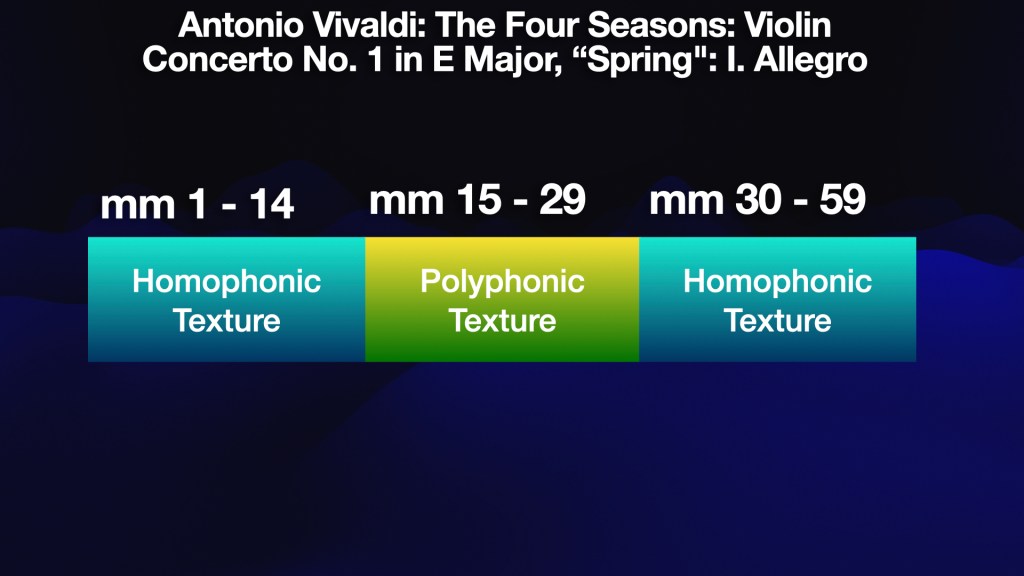
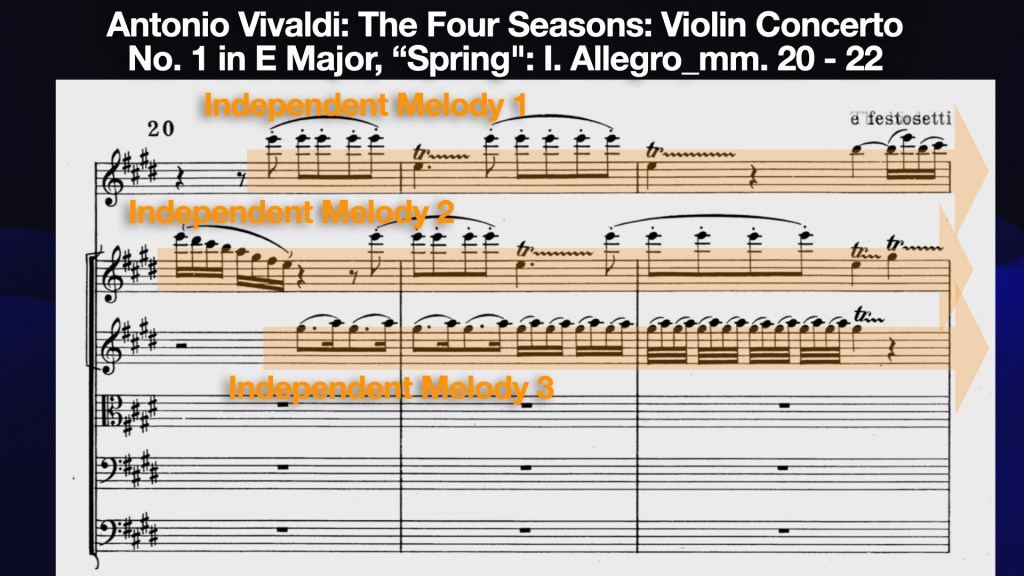
Moreover, composers often blend these three textures within a single piece. For example, Antonio Vivaldi employs a variety of textures in the first movement of his Four Seasons: Spring, a violin concerto.

 Yi-De Chen, Composer