Yi-De Chen: Seven Seemingly Common Cups, for Wind Quintet (2010) [10’51”] Info: This work has been featured in the following 2 concerts. National Taiwan Cultural Center Distinction Award NewsNet, “National Cultural Center Composition Award Recipient Award Announced”, April 29, 2011 Retrieved from http://www3.thu.edu.tw/facd/detail.php?newsID=3597&prevID=328 _____________________________________
Yi-De Chen’s B.M. Degree Recital Date: 20:30, Apr 25, 2011 Location: Experimental Theatre, Taipei National University of the Arts, Taipei City, Taiwan
Performers: Ann Keng, flute & piccolo Min-Hua Chiu, oboe & English horn Chang-Chieh Chang, clarinet Ying-Chu Chen, horn Chia-Yu Hsu, bassoon Tai-Chi Chen, conductor
_____________________________________
Event: National Cultural Center Competition Distinct Award Recipient Concert Date: 14:30, Jan 21, 2011, premiere Location: National Recital Hall, Taipei City, Taiwan
Performers: Ann Keng, flute & piccolo Min-Hua Chiu, oboe & English horn Chang-Chieh Chang, clarinet Ying-Chu Chen, horn Chia-Yu Hsu, bassoon Tai-Chi Chen, conductor
Host: National Chiang Kai-Shek Cultural Center _____________________________________
Program Note
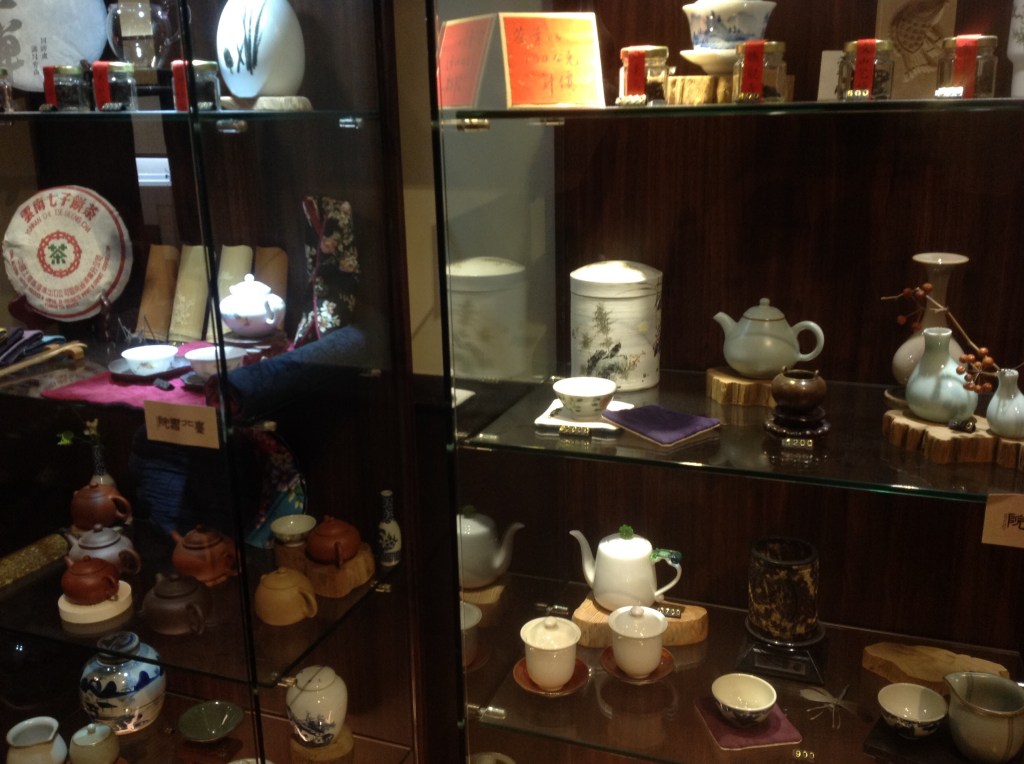
I continue to be attracted by the extended meanings and associations of things which are considered to be commonplace. For example, a seemingly common cup can be regarded as a simple container, but also have abstract associations as well – it might be a symbol, conjuring a beautiful memory or feeling.
This piece is a suite consisting of seven movements: Pelude, Capriccio I, Berceuse, Intermezzo, Ballade, Capriccio II, and Finale. The first movement is an introduction and the following five movements have different styles which contrast each other. Finally, I recall all the musical ideals from each movement, combining them into a humorous Finale. I designed and organized the structure of the piece in order to highlight the unique characteristics of each instrument in a wind quartet, and showcase the talents of each performer. There are clear melodies and rhythmic patterns in some of the movements, such as Intermezzo and Berceuse. However, some movements are written in styles of the twentieth century.
By placing new content in the containers of familiar musical forms, I reinterpreted these traditional seven genres in imaginative and creative ways. Through incorporating various styles and genres, I hope to appeal to and inspire a wide audience.
Yi-De Chen: Three Movements, for String Quartet (2009) [9’20”]
Event: Joint Composition Students Concert
Date: 19:30, Mar 21, 2011, premiere
Location: Concert Hall, Soochow University, Taipei, Taiwan
Performers:
Ting-Yi An, violin I
Sheng-Chia Chang, violin II
Jo-Fan Chen, viola
Yu-Ling Wang, violoncello
Szu-Yun Hsieh, conductor
Host: Soochow University, National Taiwan Normal University and TNUA
Program Note
The work consists of three movements with different characteristics. The author uses a core theme throughout the whole song and operates on the contrast between the movements. In the music, the three emotions of brewing accumulation, conflict comparison, and depression convergence are elaborated, and the music can be continuously flowed by the joint music.
In the first movement, the thoughts containing the characteristics of the repressive elements gradually stack up and accumulate in the way of imitating the alignment, and the music is gradually swayed, making the music gradually tense and moving toward the high point of tension, leading to the next movement. In the second movement, the accumulated energy bursts, and a series of conflicts and confrontations between different timbres, rhythms, strengths, and expressions of music material. The third movement describes the scene of a depression left behind after a violent conflict, purchased from a relatively thin sound. In addition, the Westminster bell melody transformed from the core theme conveys the end and tranquility of an event, ending with a relatively empty, static atmosphere.
 Yi-De Chen, Composer